
第 07 / 08 · 12 分鐘
問題與牌位的工作
寫出有範圍的問題,理解同一張牌如何隨牌位改變解讀任務。
給問題一個可以落腳的範圍
「工作會怎樣?」可以縮成「這個月接下新專案前,我需要看清哪些條件?」後者有情境、時間與關注點。你的答案因此可以聚焦到工作量、合作方式或準備程度。
感情問題也可以保留吸引人的核心,同時說清楚要讀什麼:例如「這段關係目前的互動模式,以及我下一次談話能帶來的改變」。一個問題不要同時包住所有人生領域。
牌位像句子中的動詞
「現況」要求描述正在發生的模式;「阻礙」要求找出讓事情卡住的用法;「建議」要求提出可採取的態度或做法。先把牌位的問題讀出來,再接牌義。
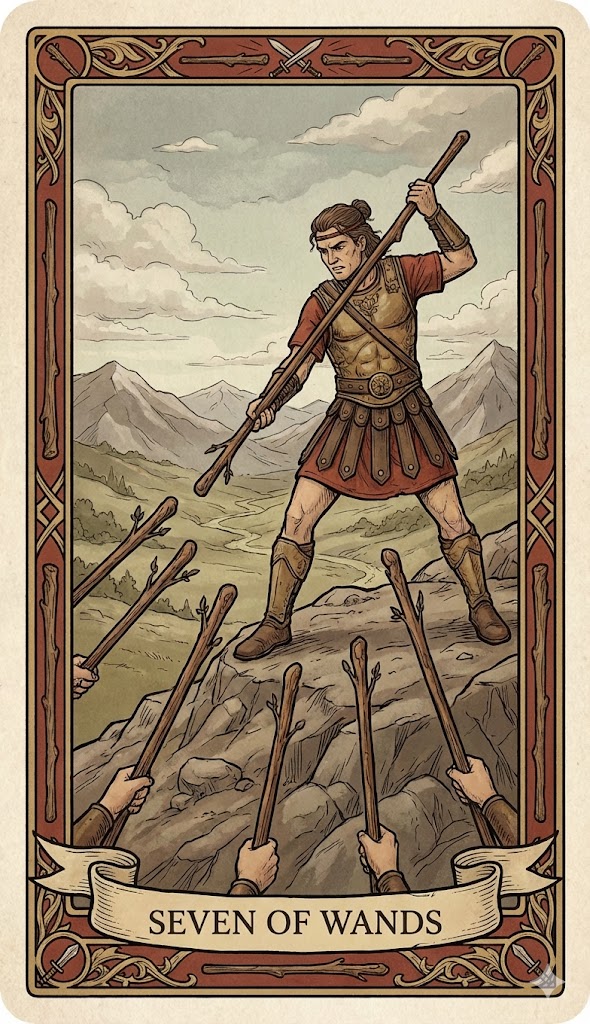
例如權杖七在現況可讀成捍衛立場;在阻礙,可能是把所有回饋都當攻擊;在建議,則是選定重要界線並說明理由。這三者共享一個主題,但回答的任務不同。
先固定牌陣,再開始抽牌
先決定各位置的問題與順序。牌陣指南中的編號與本站抽牌順序相同;賽爾特十字的第六位在本站採「建議行動」。使用其他書籍的版本時,先核對位置定義。
三張牌已足以練習結構。把背景、現在與未來趨勢串起來時,說明哪個模式延續、哪個部分正在改變,再提出需要確認的條件。
同一張牌,三種任務
換個牌位,讀法如何改變?
權杖七正位。選一個牌位,看看同一個主題如何回答不同的問題。
你正在捍衛一個重要立場。先辨認壓力來自哪些要求,以及哪些界線已經說明。
若每個不同意見都被當成攻擊,防衛會讓合作卡住。檢查哪些回饋其實可以幫你修正做法。
選定最重要的界線,說清楚理由,也分辨哪些細節可以協商。堅持不必變成對所有事情說不。
檢查理解
權杖七落在「阻礙」時,哪個解讀最回應牌位?
它把捍衛立場這個主題放進「什麼讓事情卡住」的問題;不是把整張牌判成好或壞。
換你試讀
留下你的第一個解讀
LESSON 07 / 08 · 12 MIN
Questions and the work of positions
Write a scoped question and understand how a position changes a card’s task.
Give the question a workable scope
“What will happen with work?” can become “What conditions should I understand before accepting a new project this month?” The second question has context, time and focus, making workload, collaboration and preparation relevant.
A relationship question can keep its emotional focus while naming the task: “What is our current interaction pattern, and what could my next conversation change?” One question need not contain every area of life.
Positions give the card a job
“Current situation” asks for an active pattern. “Obstacle” asks how a pattern obstructs the issue. “Advice” asks for a usable attitude or action. Read the position’s question aloud before adding the card.
The Seven of Wands as a situation can describe defending a position. As an obstacle, it may show treating all feedback as attack. As advice, it can invite a clear boundary with reasons. The theme is shared; the task differs.
Set the spread before drawing
Decide the questions and order of the positions first. The guide’s numbering matches this site’s draw order; position six of our Celtic Cross is “Suggested action.” Check position definitions when using another book’s version.
Three cards are enough to practice structure. Connect past background, present conditions and future tendency by explaining what continues, what changes and which conditions require confirmation.
One card, three jobs
What changes when the position changes?
Seven of Wands, upright. Choose a position and watch the focus change.
You are defending a meaningful position. Identify where the pressure comes from and which boundaries have already been communicated.
If every disagreement is treated as an attack, defensiveness can obstruct collaboration. Identify feedback that could improve the approach.
Choose the boundary that matters most and explain why. Distinguish it from details that can be negotiated. Conviction need not mean refusing everything.
Check your understanding
Which Seven of Wands reading responds most directly to an obstacle position?
This places the theme of defending a position inside the question “what blocks progress?” rather than judging the whole card as good or bad.
Your reading