
第 04 / 08 · 12 分鐘
數字牌與故事進程
把數字當成整理線索,再用牌面差異修正第一印象。
Ace 到十是一張路線圖
可以先把 Ace 看成起點,二看成互動或抉擇,三看成發展,四看成形成結構,五看成擾動,六看成重新調整,七看成考驗與策略,八看成密集作用,九看成接近成熟,十看成一個階段的極限或完成。
這張路線圖用來幫助比較。它不會讓四張同數字的牌變成同一個答案,也不代表事情一定按數字順序發生。
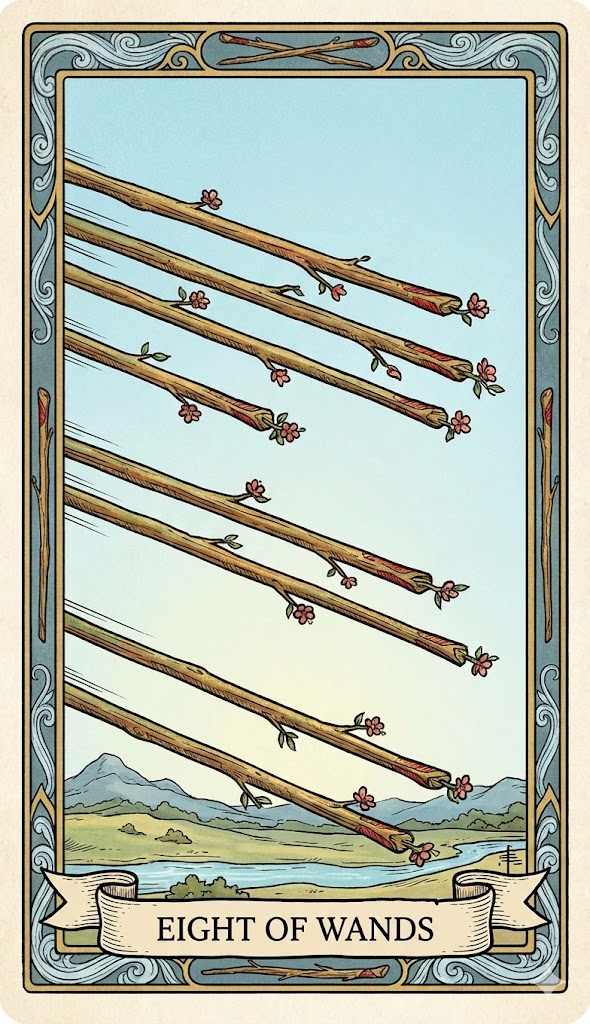
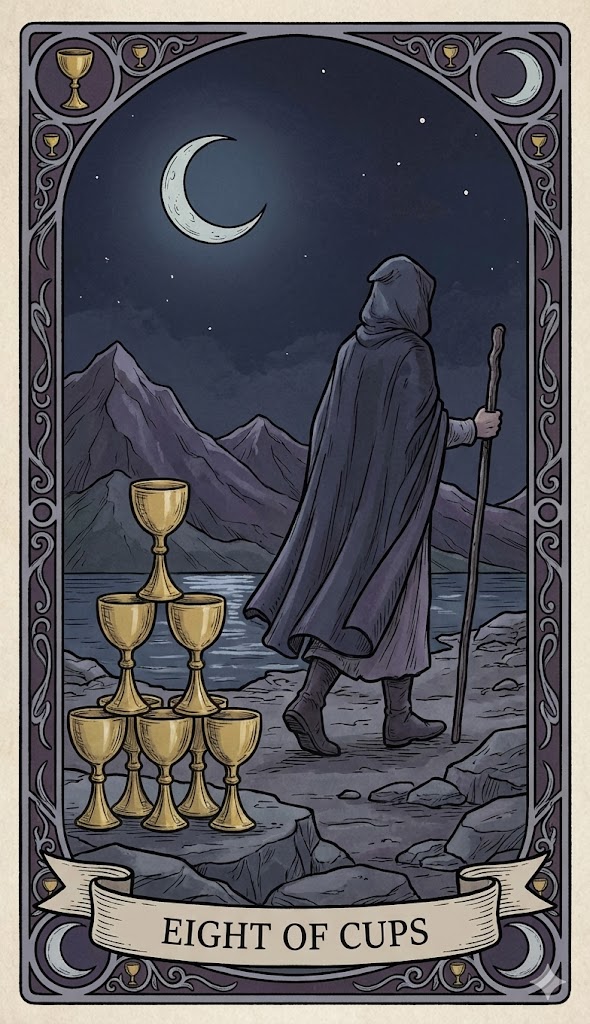
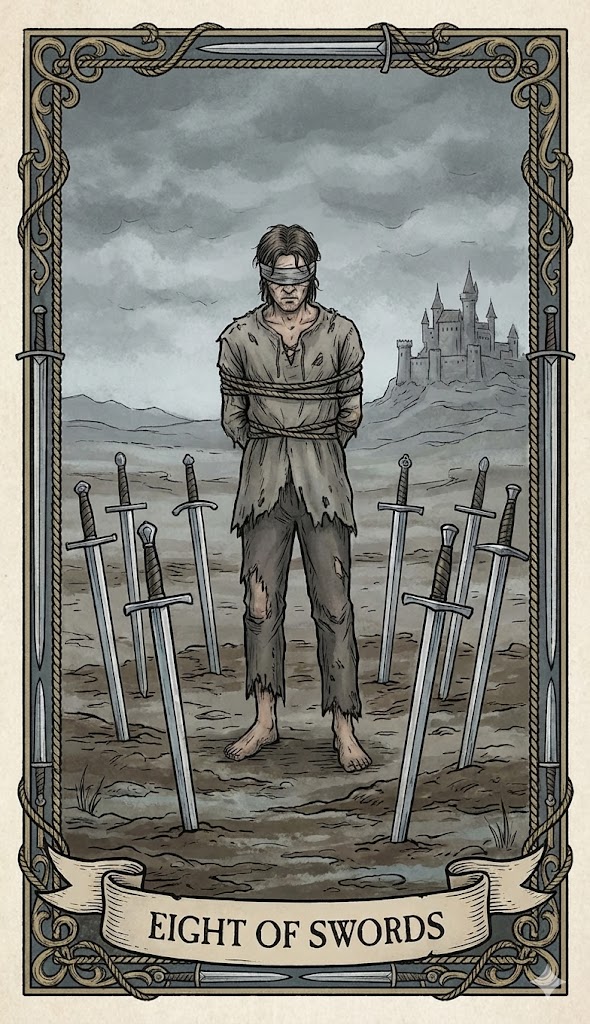
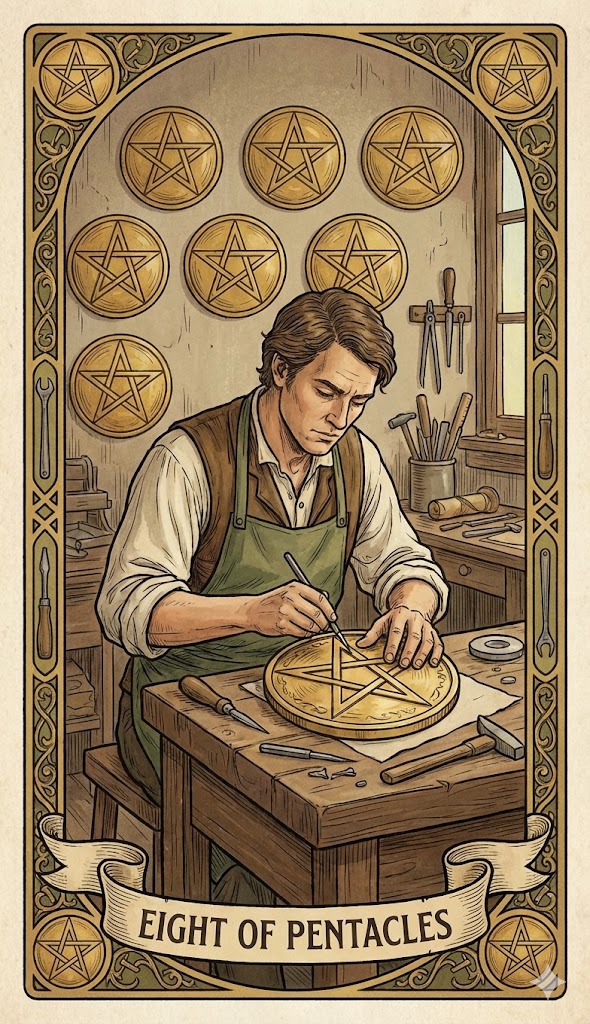
用八號牌測試這張地圖
權杖八把動能送出去,星幣八把注意力放在反覆磨練;聖杯八讓人物離開原本的情感安排,寶劍八則呈現受限感。若只背「八=進步」,後兩張的核心就會被漏掉。
比較時問三件事:什麼正在移動?什麼停住?人物對自己的處境有多少選擇?答案會讓數字和花色真正連在一起。
順序不是吉凶階梯
九與十也不是分數高低。聖杯九可以談個人的滿足,聖杯十關注共享的情感生活;權杖十則讓累積的責任成為負荷。觀察「多了什麼」和「代價是什麼」,比只看大小更有用。
檢查理解
四張八號牌最適合怎麼一起學?
數字提供比較起點,牌面提供差異。尤其聖杯八與寶劍八,不能被「八=忙碌」取代。
換你試讀
留下你的第一個解讀
LESSON 04 / 08 · 12 MIN
Numbers and sequences
Use numbers as organizing clues and refine first impressions with the actual scenes.
Ace to Ten as a route map
A useful starting map is: Ace as an opening, Two as exchange or choice, Three as development, Four as structure, Five as disruption, Six as readjustment, Seven as testing or strategy, Eight as concentrated activity, Nine as approaching maturity and Ten as a cycle’s limit or completion.
The map helps comparison. It does not make all four cards of a rank identical, nor require events to unfold in numerical order.
Test the map with the Eights
The Eight of Wands sends movement outward, while the Eight of Pentacles concentrates on repeated craft. The Eight of Cups leaves an emotional arrangement; the Eight of Swords depicts restriction. Memorizing “Eight means progress” would miss the last two scenes.
Ask what moves, what stays still and how much agency the figure appears to have. These questions connect number and suit to the specific picture.
Sequence is not a ladder of good fortune
Nine and Ten are not higher scores. The Nine of Cups can concern personal satisfaction, while the Ten of Cups concerns shared emotional life. The Ten of Wands makes accumulated responsibility a burden. Ask what has accumulated and what it costs.
Check your understanding
How should you study the four Eights together?
The number supplies a starting comparison; the images supply differences. The Eight of Cups and Eight of Swords cannot be reduced to “Eight means busy.”
Your reading