Reversed cautionBurnout, refusal to delegate, or the chance to release an unnecessary burden
Reflection questionSeparate responsibility that belongs to you from responsibility you could share. Explain the distinction.
Wands Ten
Core Symbolism of Ten of Wands
A goal is close, but the load must be named and redistributed
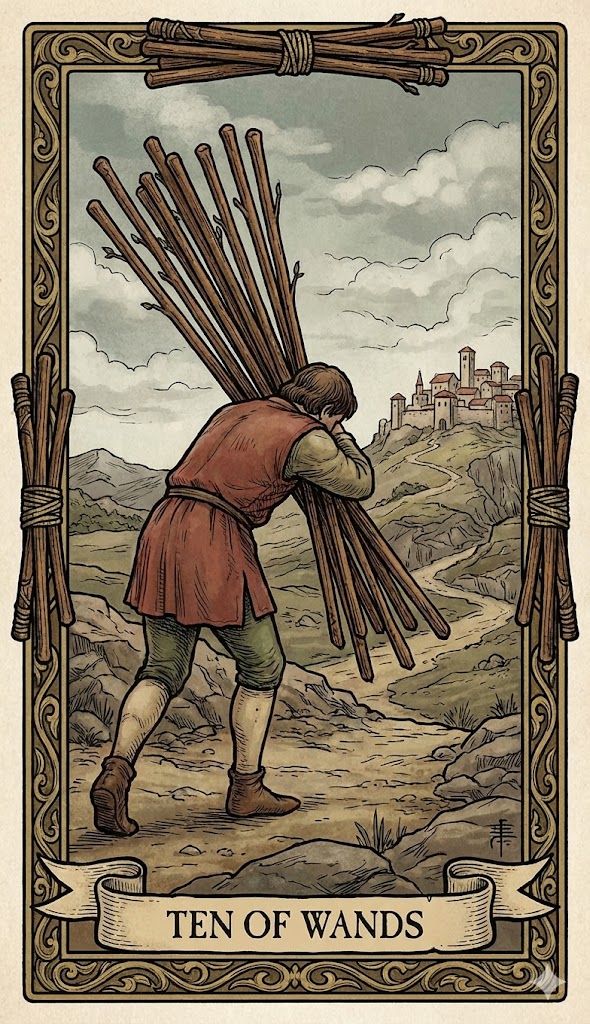
Ten of Wands Image and Symbolic Clues
A figure carries ten wands that partly block the view ahead. The destination is present, but the way of carrying the load is difficult.
Ten of Wands Upright Meaning
A goal is close, but the load must be named and redistributed
Ten of Wands Reversed Meaning
Burnout, refusal to delegate, or the chance to release an unnecessary burden
Ten of Wands in Love and Relationships
In a relationship reading, compare “a goal is close, but the load must be named and redistributed” with both people's observable behavior. The card is more useful for checking reciprocity, expectations, and boundaries than for guessing another person's mind.
Ten of Wands in Work and Career
In a work reading, translate “a goal is close, but the load must be named and redistributed” into a concrete question about pace, role, resources, quality, or communication.
Ten of Wands in Money and Practical Matters
For a question about resources, examine how burden, responsibility, completion pressure shapes your allocation of time, attention or money. State one practical condition you need to check, such as available time, a commitment or a cost.
Ten of Wands in Spread Positions
Select a position. The image stays the same; the question changes.
Situation: A goal is close, but the load must be named and redistributed
Obstacle: examine whether this expression is obstructing the question: Burnout, refusal to delegate, or the chance to release an unnecessary burden
Advice: identify a response that develops the card’s central invitation: A goal is close, but the load must be named and redistributed
Practice After Drawing Ten of Wands
Compare this card in a situation position and an advice position. Keep the same visual evidence, then explain which part of your sentence changes because the position asks a different question.
Bring the meaning back to your question. After reading Ten of Wands, return to the drawing interface and see how the card changes in different spread positions.