Examine whether being right is worth the damage to trust and dignity
conflictself-interestwinning at a cost
Core themesconflict, self-interest, winning at a cost
Reversed cautionReconciliation, lingering resentment, or avoiding accountability after conflict
Reflection questionWrite what was won and what was lost in an argument, using different kinds of value.
Swords Five
Core Symbolism of Five of Swords
Examine whether being right is worth the damage to trust and dignity
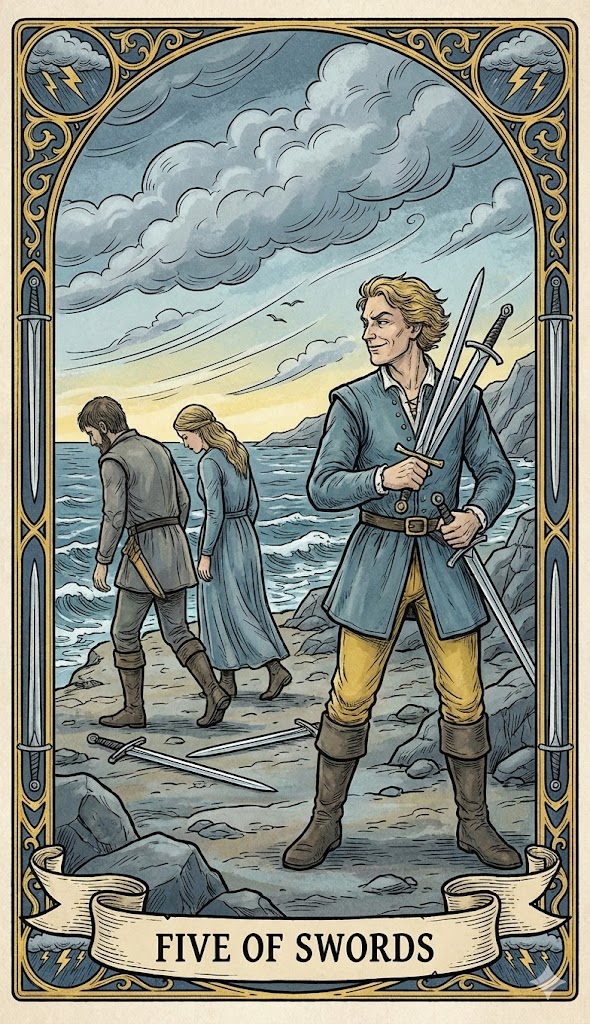
Five of Swords Image and Symbolic Clues
One figure gathers swords as others move away. The remaining weapons and departing figures make the cost of conflict visible.
Five of Swords Upright Meaning
Examine whether being right is worth the damage to trust and dignity
Five of Swords Reversed Meaning
Reconciliation, lingering resentment, or avoiding accountability after conflict
Five of Swords in Love and Relationships
In a relationship reading, compare “examine whether being right is worth the damage to trust and dignity” with both people's observable behavior. The card is more useful for checking reciprocity, expectations, and boundaries than for guessing another person's mind.
Five of Swords in Work and Career
In a work reading, translate “examine whether being right is worth the damage to trust and dignity” into a concrete question about pace, role, resources, quality, or communication.
Five of Swords in Money and Practical Matters
For a question about resources, examine how conflict, self-interest, winning at a cost shapes your allocation of time, attention or money. State one practical condition you need to check, such as available time, a commitment or a cost.
Five of Swords in Spread Positions
Select a position. The image stays the same; the question changes.
Situation: Examine whether being right is worth the damage to trust and dignity
Obstacle: examine whether this expression is obstructing the question: Reconciliation, lingering resentment, or avoiding accountability after conflict
Advice: identify a response that develops the card’s central invitation: Examine whether being right is worth the damage to trust and dignity
Compare with Seven of Swords
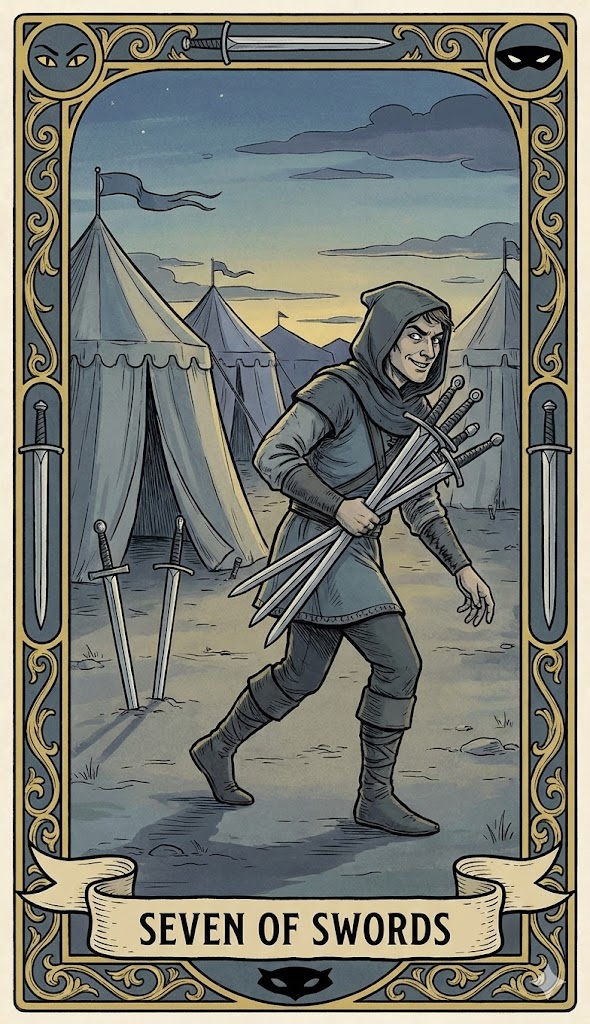
The Five of Swords examines the cost of conflict; the Seven of Swords examines strategy and selective disclosure. Distinguish open confrontation from incomplete sharing of information.
Compare this card in a situation position and an advice position. Keep the same visual evidence, then explain which part of your sentence changes because the position asks a different question.
Bring the meaning back to your question. After reading Five of Swords, return to the drawing interface and see how the card changes in different spread positions.